
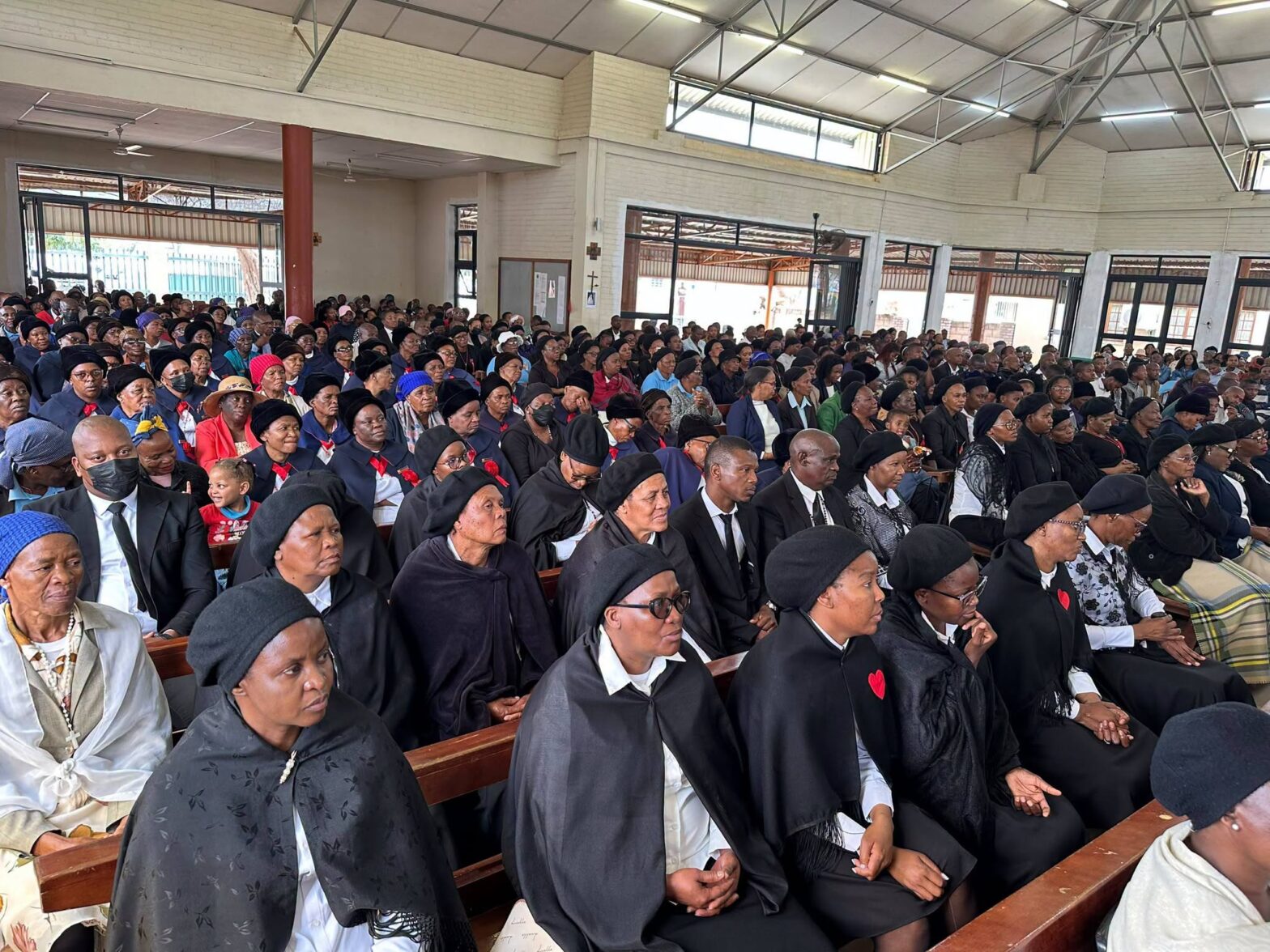
The St. Conrad’s Catholic Mission in Ramotswa was established in 1935 by German missionaries. It is recognized as the largest parish in Botswana, operating as a vital hub within the Catholic Diocese of Gaborone. The mission has a strong history of vocational development, producing numerous priests from both the main station and its outstations over the past 30 years.
Key Historical and Functional Aspects:
Establishment: Founded in 1935, the mission is a cornerstone of Catholicism in the region.
Significance: Frequently described as the “Colossus of the Catholic Church in Botswana” due to its large, active congregation.
The institution, St. Conrad’s Mission Catholic Church forms part of the early twentieth-century expansion of Roman Catholic missionary activity within the Bechuanaland Protectorate (now Botswana). Its origins are inseparable from the broader ecclesiastical strategy of the Catholic Church, which, from the late 1920s onwards, sought to consolidate a permanent presence through the establishment of mission stations combining evangelisation with social services.
Foundation and Early Development
The Ramotswa mission was formally established in 1935, under the direction of Oblate missionaries and assisted by Franciscan sisters.
It represented one of the earliest Catholic incursions into tribal territories in southern Bechuanaland, following earlier foundations at Kgale (1928) and Lobatse (1929).
From its inception, the mission adhered to a characteristic tripartite model:
- a church for liturgical and pastoral activity,
- a primary school (known as St Conrad’s), and
- a clinic serving both catechumens and the wider population.
This integration of religious, educational, and medical functions was not incidental but constitutive of Catholic missionary policy in the region, where evangelisation was pursued alongside the provision of welfare and instruction.
Institutional Role within the Diocese
The mission subsequently became incorporated into the ecclesiastical jurisdiction that would evolve into the Diocese of Gaborone, reflecting the gradual institutionalisation of Catholic structures in Botswana during the mid-twentieth century.
By the 1950s, the arrival of Passionist missionaries—notably from Ireland—reinforced staffing levels and extended pastoral reach. One of these clergy, Fr. Carthage Power, was specifically assigned to the Ramotswa mission, indicating its continued importance within diocesan planning.
Documentary and Material Evidence
Archival holdings, such as those preserved at the Bodleian Libraries, attest to ongoing development at the site, including documentation of clinic construction and equipment procurement between 1967 and 1975.
These records demonstrate the sustained investment in medical infrastructure and confirm the mission’s long-term function as a healthcare node.
Physical Situation and Administrative Identity
The mission is situated along the Main Road in Lesetlhana Ward, Ramotswa, and continues to operate as a recognised religious institution within the South-East District.
It has historically maintained associated entities, including a convent and parish organisations, indicative of a stable ecclesial community.
Cultural and Liturgical Life
Evidence from late twentieth and early twenty-first century sources suggests a vigorous parish culture, particularly in sacred music. The St Conrad’s choir has achieved repeated distinction in diocesan festivals, illustrating the mission’s role as a centre of Catholic cultural expression in the region.
Later Historical Associations
The church has also functioned as a site of significant ecclesiastical events, including priestly ordinations—for instance, that of Lawrence Ofentse Pheto in 2005—underscoring its enduring liturgical and institutional relevance within the diocesan framework.
Concluding Archival Assessment
St. Conrad’s Mission at Ramotswa may be characterised as a typical yet regionally significant Catholic mission station, embodying the missionary synthesis of worship, education, and medical service. Its foundation in 1935 places it among the formative institutions of Catholic expansion in Botswana, while extant archival material confirms its sustained operational continuity and adaptive role within both ecclesiastical and local community structures.